Stanley Greene

former fixer for stanley greene, andrei mironov, killed in ukraine

Russian interpreter Andrei Mironov and photojournalist Andrea Rocchelli were killed in eastern Ukraine by a mortar attack in rebel-held Slavyansk on Saturday. Andrei Mironov was a fixer for many journalists in Chechnya, including NOOR's Stanley Greene.

Andrei Mironov was a former Russian dissident and political prisoner during the Soviet era. Stanley took his portrait, above, in Moscow in 2006.
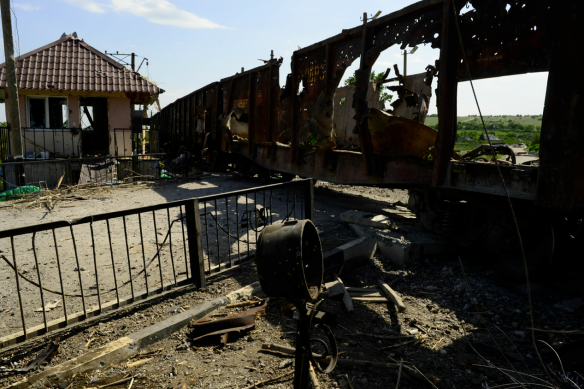

"He was  a close friend, and someone I had spent time with over the years," wrote Stanley in an update to the NOOR office. "The irony is that it happened in the exact spot I was in the day before, trying to do the same picture of a destroyed train."

Andrea Rocchelli was the founder of Cesura agency. He is the first journalist to die in Ukraine since the crisis began.

"This place really drinks blood. Today I photographed ballots being burned by pro-Russian forces," wrote Stanley.

"The only way to honour Andy Rocchelli is to go back on the road, and keep on covering Ukraine," wrote journalist and Stanley's colleague Francesca Borri on her Twitter.

 

five convicted in murder of journalist anna politkovskaya

"From time to time, God causes people to be born—and she was one of them—who had a lust to go abroad at the risk of her life and discover news. Today it may be far-off things, tomorrow of some hidden mountain, and the next day of some nearby men who have done a foolishness against the state. These souls are very few, and of these few, not more than ten are of the best. Anna Politkovskaya was so blessed to be one." - Stanley Greene

Yesterday, a Moscow court convicted five men of murdering investigative journalist and Kremlin critic Anna Politkovskaya. She was known for her opposition to the Chechen conflict and Russian president Vladimir Putin. NOOR's Stanley Greene took this photo before she was assassinated in the elevator of her apartment building on October 7, 2006, Vladimir Putin's birthday.

Stanley is currently in Ukraine covering the ongoing crisis.


world press photo pop-up group exhibition

All of NOOR's photographers have a strong connection to World Press Photo, as award winners, Joop Swart Masterclass participants and educators, jury members, or supervisory board members. To celebrate this fact, and with the World Press Photo Awards Days fast approaching, NOOR presents a small pop-up exhibition in an informal setting, featuring relevant work by all our photographers.

NOOR's pop-up exhibition is currently hanging at the Cafe de Engelbewaarder, which is situated just over the canal from Het Compagnie Theater, the location of this year's World Press Photo Awards Days. The exhibition runs until May 12th.

Address Engelbewaarder: Kloveniersburgwal 59, 1011 JZ Amsterdam.

This exhibition is supported by Nikon Europe.

All printing by FotolabKieKie.

Exhibition photos by Jen Tse.

outdoor installation in za'atari refugee camp

NOOR photographers Nina BermanAlixandra FazzinaAndrea Bruce, and Stanley Greene worked on a collaborative photography project at the Za'atari refugee camp for Syrian refugees in northern Jordan. The photographers documented life in the camp and set up a photo portrait booth. They made several thousand images, nearly 100 of which were turned into large scale prints, blown up to 3 meters wide, and pasted on the camp's concrete security walls.

“We tried to strike a balance with images showing daily life without sugar coating the reality and at the same time not make the experience of looking at the wall depressing,” wrote Nina Berman on her Instagram, adding that certain questions would never be concerns when photographing for publications, but presenting photographs in public where the subjects are also the audience becomes an entirely different conversation.

To learn more about the  NOOR Foundation/Za'atari project, contact the NOOR office.


on community, transparency, and integrity

As part of the NOOR-Nikon Masterclass for Documentary Photography, Jon Lowenstein gave a public presentation at SALT Galata on Wednesday night. About 70 people from the wider photography community in Istanbul attended. Jon showed and talked about his long-term ongoing project on Chicago's South Side, including his short film "A Violent Thread". He touched upon how local communities and their problems are representative of bigger social issues on a larger scale. Jon also expanded how he uses photography to engage with the community and how he collaborates with the people from his own neighbourhood.


The next morning, Kursat Bayhan, one of the participants from Turkey, presented a project that his newspaper Zaman initiated, called "Time in Turkey”. This gave the group a good example of how a newspaper in the region understands the importance of photo features.


The group continued with a long debate about ethics in photojournalism, led by Benedicte Kurzen. She stressed that in every step that we are taking as photojournalists, from getting ideas to having your images published, mistakes can be made. The group discussed issues to do with setting up, preserving the identity of the people that you photograph and work with, privacy laws, the importance of caption writing, post-production, altering content and misuse of images by clients when they are taken out of context. Integrity, being transparent, being able to stand for what you are doing as a photographer, and taking responsibility are key in this process.


“It is good that we are bringing up these examples of ethical misbehavior, since it is happening all the time in this industry and it jeopardizes our credibility," said Stanley Greene. "We need to be responsible because the public trusts us and we have to make them trust us.”

Images by Frank Zuidweg.

humbleness and respect


On the third day of the NOOR-NIkon Masterclass for Documentary Photography in Istanbul, our participants learned about being sensitive and compassionate storytellers.

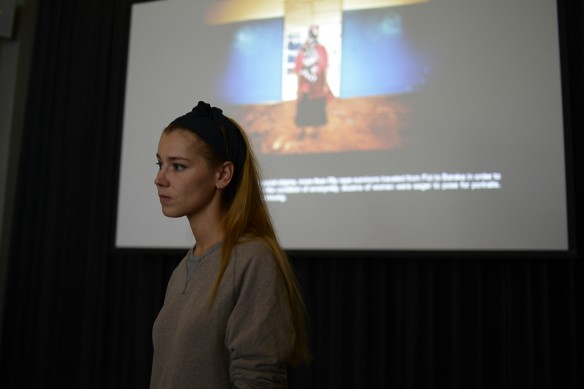
“As photographers we have a big responsibility to inherit the stories of the people that we photograph," explained Benedicte Kurzen during her presentation. "We have to ask ourselves how we represent the countries that we are covering and realize what is the perception at the end of the road for the audience back home.”


“I feel that I am kind of close to you guys in a way. I am 34 and I have been shooting for about 11 years now," she said. "I see that you are having the same questions that I am having sometimes.”


She first showed a personal body of work about eight years of South Africa, the country she recently left to move to Nigeria. Benedicte, who moved away from home when she was 17 and moved to Palestine when she was 23, said that she sometimes still struggles to understand where she belongs and how she participates and observes in the places she lives and works.

"I also realized that the way people perceive you plays an important role," she said. "For example, in South Africa, white people are sometimes still associated with apartheid. For me humbleness and respect are therefore key.”


When discussing how to work with editors, Benedicte stressed that if photographers have knowledge that editors might not have, they need to communicate it. “You know your country better that any editor who sits in an office in New York, London or Paris,” she said.


You should never say "no" to an editor, Stanley Greene added, but personal vision is critical. Ideas often come from the text department, but aren’t always visual, he said, which is why you need to explain beforehand how you see the story and how you want to shoot and visualize it.

The group continues to learn a lot and have a great time at the masterclass!

Images by Frank Zuidweg. 

a fresh set of eyes

After a great first day, NOOR photographers had practical and creative advice to share on the second day of the NOOR-Nikon Masterclass in Documentary Photography in Istanbul, Turkey.


“The danger, for all of us, is that you stay in the comfort zone. Whereas if you try and experiment, you might be surprised with the outcome”, explained Jon Lowenstein, recapping the individual portfolio reviews.


“I can see that some of you struggle with what you feel are important elements for the story and your creativity. The illustrative images are often the weakest ones,” said Benedicte Kurzen.

“Having an ‘idea list’ is great, but when you follow the list too rigidly, you miss out on the images that are magical,” continued Jon.


“I sometimes work with a list of things to capture in order to tell a story, but an ‘emotional’ list. Feelings that I am trying to show in images: fear, isolation, relief, etc.,” said Andrea Bruce.


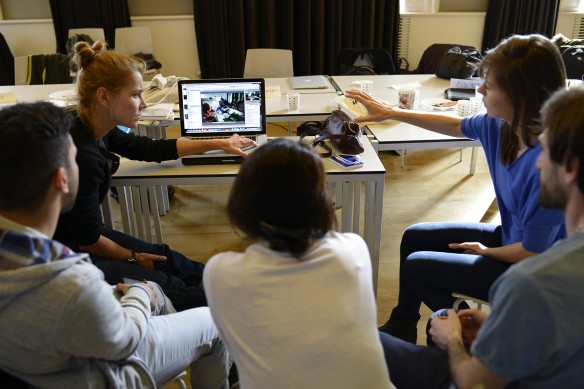
In the afternoon, three groups were formed and each group discussed and edited a small assignment the participants prepared around the theme of "fragile".

“It has been a great experience editing my work with Andrea and the other participating photographers," said Achilleas Zavallis from Cyprus. "Having the input from these photographers with diverse backgrounds, coming from different countries, gave me a new perspective on my own work. Being able to get their collective knowledge helps me to look at my work with a fresh set of eyes.”

The masterclass continues until the end of the week. Check back to see how the next few days go!

Images by Frank Zuidweg.

istanbul masterclass

Yesterday, the 2014 NOOR-Nikon Masterclass in Documentary Photography kicked off in Istanbul. For five days, 14 photographers originating from 10 different countries in the region get together with NOOR photographers Andrea Bruce, Benedicte Kurzen, Jon Lowenstein, and Stanley Greene; and NOOR’s managing director Evelien Kunst.

Situated in the headquarters of a 19th-century Imperial Ottoman Bank, SALT explores critical and timely issues in visual and material culture, and cultivates innovative programs for research and experimental thinking. “We could not think of a better venue to organize the NOOR-Nikon Masterclass in Documentary Photography”, said Serdar Darendeliler, co-founder of Genis Aci Project Office, who hosts the event this year.


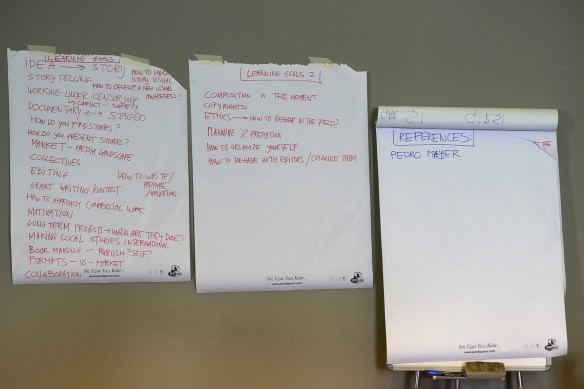
The participants want to improve their editing skills, learn more about the market, grant writing, planning, preparation, how to organize and present themselves to editors, and other practical things. They are also very interested in ethic debates and general discussions on how to stay motivated and find new collaborations. “I want to learn how to transform an idea into a visual story,” said Yasaman Dehmiyani from Iran. Meanwhile, Ozge Sebzeci from Turkey is interested in finding out more about how to approach long-term projects and decide when they are done.


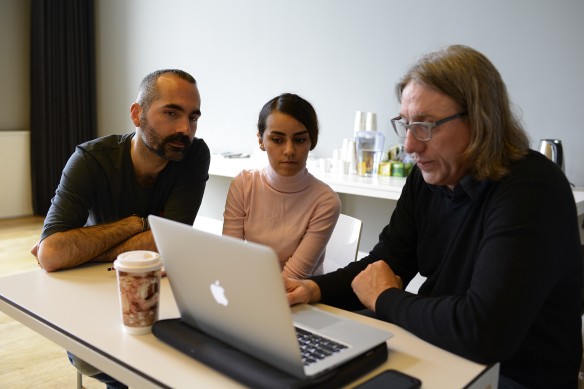
During one-on-one portfolio reviews, the photographers got to know each other and their work better. The first day concluded with a presentation by Andrea Bruce, in which she showed work from various personal projects and assignments she did for the New York Times over the past year, including her powerful work from Damascus

“For me, the most important thing to do in news stories is to humanize them," said Andrea. "To show that people are living a day-to-day normal life, even in conflict situations. I see it as my role to educate the people that read the newspaper at the other end of the world.” On the question of whether she ever felt threatened or if people got angry with her, she answered, "I believe in the power of respect. You have to respect people and then you will gain their trust."

There are many different topics to discuss and more to explore in the coming days, and we are already off to a great start!

Images by Frank Zuidweg.

third anniversary of the syrian crisis

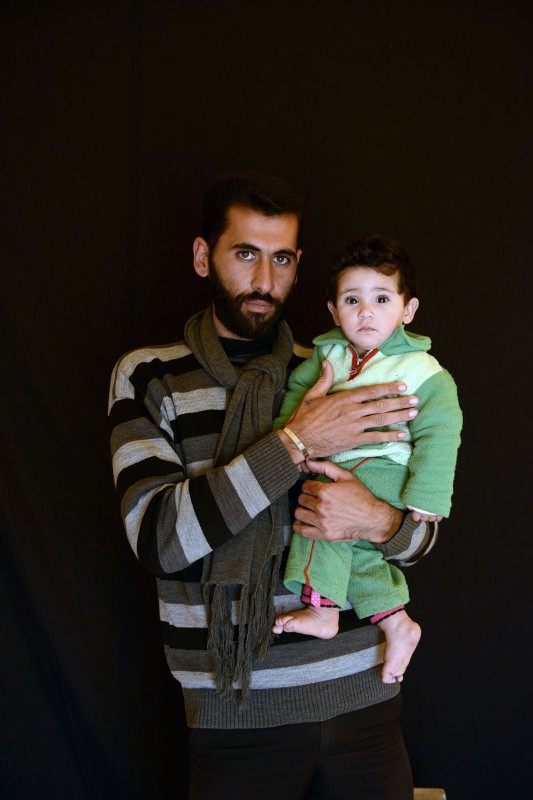
"March is also March in Syria, [...] the whites of the flowering almond branches, the orange of tulips and then this temperate, kind wind, full of light and jasmine. Then, in the house on your left, yesterday, just before sunset, Asma committed suicide. A bullet in the head – March isn’t March, in Syria. She was 13." — from a feature by NOOR's Stanley Greene.

Tomorrow is widely recognized as the third anniversary of the worst humanitarian crisis in modern times: the Syrian civil war. About three years ago, minor protests in Syria in response to the Arab Spring and government corruption escalated to large-scale unrest. The ongoing armed conflict between rebel groups and forces loyal to the Ba'ath government has created almost 2.5 million Syrian refugees, according to the UNHCR.

In 2013, NOOR's Stanley Greene and Andrea Bruce worked extensively to cover the Syrian crisis, following those involved in the fighting and the civilians and emergency workers caught in between. As winter turns to spring and the first flowers tentatively bloom, we invite you to take a look at Crisis in Syria, our collection of stories about the conflict, and remember that March may not be March in Syria.